

I’m a Doctor Who’s Treated Ebola. Here’s Why I’m Especially Worried About the Current Outbreak
News of an Ebola outbreak is always unsettling. The disease, which is severe and often fatal, begins with flu-like symptoms before rapidly progressing to severe vomiting, uncontrollable bleeding and organ failure.
It carries a fatality rate of around 50%, making it one of the deadliest viral infections in the world.
This isn’t the first time Ebola has raised global alarm. Perhaps the images of health care workers in full hazmat suits feel familiar. However, the current Ebola outbreak in central Africa is unusual — and perhaps, more concerning than previous ones — for several reasons.
Fueling the outbreak is the rare Bundibugyo strain, for which there’s no treatment or vaccine.
It has already sickened at least 350 and killed 60. The epicenter is in the Democratic Republic of the Congo, but cases have also popped up in neighboring Uganda.
Last month, the World Health Organization declared the Ebola outbreak in DRC a public health emergency of international concern, its highest level of alarm.
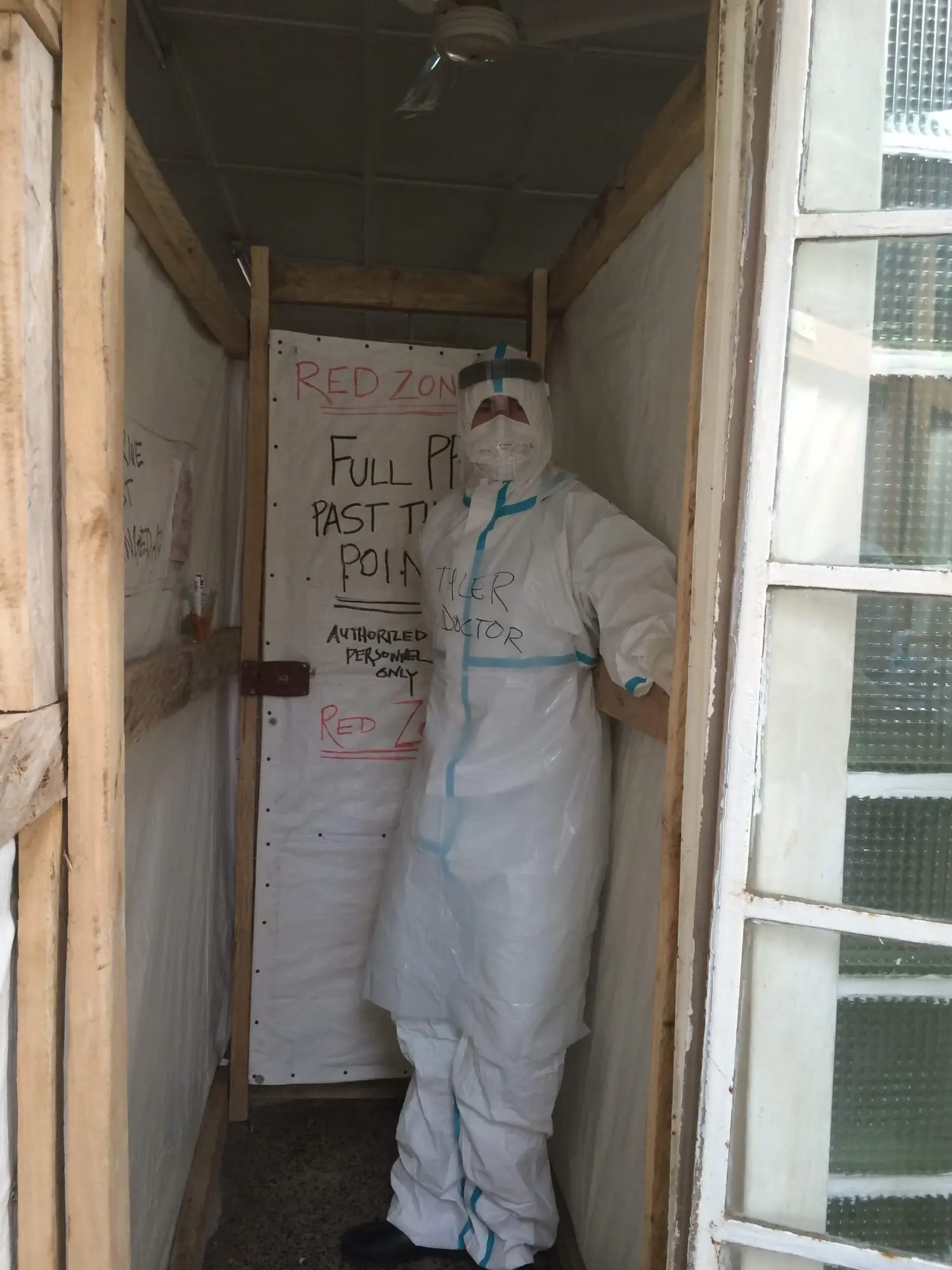
Dr. Tyler Evans, an infectious disease physician who treated patients in Sierra Leone during the 2014-2016 Ebola epidemic and a 2019 outbreak in DRC, knows Ebola well.
He has seen how the virus rips through communities. The 2014-2016 Ebola epidemic was the largest outbreak in history. “It was so incredibly stressful,” Evans, founder of the Wellness Equity Alliance, tells TODAY.com.
Yet, this latest Ebola outbreak has him on high alert. Here’s what Evans has learned from treating Ebola, and why the current situation is so concerning:
Testing Isn’t Where It Needs to Be
Access to fast, accurate diagnostic testing has been one of the biggest challenges in this outbreak, says Evans.
Molecular (RT-PCR) testing is the gold standard for diagnosing Ebola. Rapid antigen and antibody tests are also available, but less sensitive.
Here’s the problem: The tests need to be calibrated for the right species of the Ebola virus in order to work, says Evans.
Ebola is a disease caused by four orthoebolaviruses. The most common strain is the Zaire virus, which fueled the 2014-2016 epidemic and other recent outbreaks. The Bundibugyo virus is more rare, which means tests are harder to come by.
In April, when the first cases were reported, doctors initially used Ebola tests calibrated for the Zaire virus, says Evans, so patients were testing false-negative. The outbreak went undetected and uncontrolled for nearly four weeks, which hindered the response.
Today, the right tests still aren’t widely available. And it can take days for an infected person’s viral load to build up to the point where it’s detectable, as well as to get the test result back, both of which delay contact tracing. There are no currently rapid tests for Bundibugyo, Evans say.
“Whenever you’re dealing with infectious disease outbreaks, every day is costing a significant amount of lives,” says Evans.
There Are No Vaccines or Treatments
Another cause for concern is that there are no effective vaccines or therapeutics for the Bundibugyo virus, says Evans.
Currently, there are two licensed Ebola vaccines, which were developed for the Zaire virus and do not protect against the Bundibugyo strain, per the CDC.
Scientists are racing to develop vaccine candidates to protect against the Bundibugyo virus. “Of course, everything has to go through clinical trials for safety and efficacy, and that takes time,” says Evans, who’s received the Ebola vaccine.
Although monoclonal antibody drugs exist for the Zaire strain, there are no antivirals for the Bundibugyo virus. Treatment involves supportive care (and a lot of PPE), which can be difficult to deliver in resource-strapped settings, Evans notes.
The Virus Is Spreading to Urban Areas
“Ebola is already in multiple major African cities, which is a major problem,” says Evans, who authored “Pandemics, Poverty, and Politics.”
The Ituri province, where 88% of cases are located, is a “commercial and migratory hub” bordering multiple countries, which increases the risk of exported cases, the WHO said.
The Bundibugyo virus has reached Goma, a major port city on Lake Kivu in eastern DRC. At least 15 people have tested positive in Kampala, the capital of Uganda and home to millions.
“That gives me significant concern,” says Evans.
Historically, Ebola outbreaks have been limited to rural areas and “fizzled out” relatively quickly, says Evans. The last time it hit densely populated cities was the 2014-2016 epidemic, which caused over 28,000 cases and 11,300 deaths.
“The scale and the impact of that outbreak was very frightening,” says Evans.
The Bundibugyo virus transmits through close contact with an infected person or their bodily fluids, which often occurs in households or health care settings.
“I think there’s potential for this outbreak to hit other regions across Sub-Saharan Africa, and possibly spread intercontinentally,” says Evans.
The Epicenter Is Conflict-Torn
The DRC is no stranger to Ebola, but recent crises in the region are making it nearly impossible to contain the outbreak. “This is one of the most conflicted nations in the world,” says Evans.
The majority of Ebola cases have been reported in the Ituri, North Kivu and South Kivu provinces, which are experiencing a humanitarian crisis, per the United Nations. The outbreak is colliding with violence and population displacement.
This hinders testing, contact tracing and delivering care in the region, which already lacks health facilities.
“(Compared to) the last Congo outbreak, this one is much more challenging given the conflict. It’s harder to implement good public health practices,” says Evans.
There’s a Lack of Trust
“One of the biggest challenges right now is the systematic distrust,” says Evans. “If people get sick, it’s not like they’re going to actively seek out health care if they’re scared or don’t trust the government, which leads to a perfect storm for Ebola.”
The strict measures to contain Ebola often clash with local traditions, including burials, NBC News reported previously.
Deceased Ebola patients are extremely contagious. “The viral load is actually highest the first 48 hours after death, and so the risk of transmission is significant,” says Evans.
Safe handling and burial procedures are crucial to prevent the spread, but often go against the wishes of grieving relatives. Recently, an Ebola hospital in southern DRC was burned down by residents trying to recover the body of a loved one.
The Response Is Affected by Aid Cuts
“There’s been a depletion or sort of evisceration of the infrastructure and resources that previously existed,” says Evans.
The outbreak comes after major cuts to global health and foreign assistance, as well as the U.S. withdrawal from the WHO. Among these changes was the dismantling of the U.S. Agency for International Development (USAID), a major contributor to the DRC health system.
Former USAID and CDC officials told NBC News that if USAID was still intact, the funding and resources in the DRC could’ve helped detect and control the outbreak sooner. The State Department denied these claims and announced it would set up Ebola clinics and fund response efforts.
However, many experts agree that the speed lost in the beginning of the outbreak has cost lives. “Being quick and nimble in these outbreaks is key, and now we’re kind of behind the eight ball, trying to catch up,” says Evans.
Global Travel Is Peaking During World Cup
The current Ebola outbreak is colliding with the largest World Cup in history. Teams from 48 countries will compete in games held in 16 cities across Canada, the U.S. and Mexico.
“I think the World Cup is a big risk factor. I’m really concerned,” says Evans, who has tickets to games in the U.S. and Mexico but is now reconsidering whether he’ll attend.
It’s unclear how the World Cup may impact the spread of Ebola, but some countries have already enforced travel bans over fears of imported cases.
The CDC is restricting entry into the U.S. for foreign travelers who’ve visited DRC, Uganda or South Sudan in the last 21 days, and the Department of Homeland Security has introduced screening measures for Americans who recently traveled to area.
However, the CDC reassures that the risk posed by the Ebola outbreak to Americans is low.
“People may ask why would Ebola matter to the average American, and the reality is, if this were to get into the US, Americans will be at risk, and Ebola has one of the highest case fatality rates known,” says Evans.