

A massive hidden formation found under East Antarctica
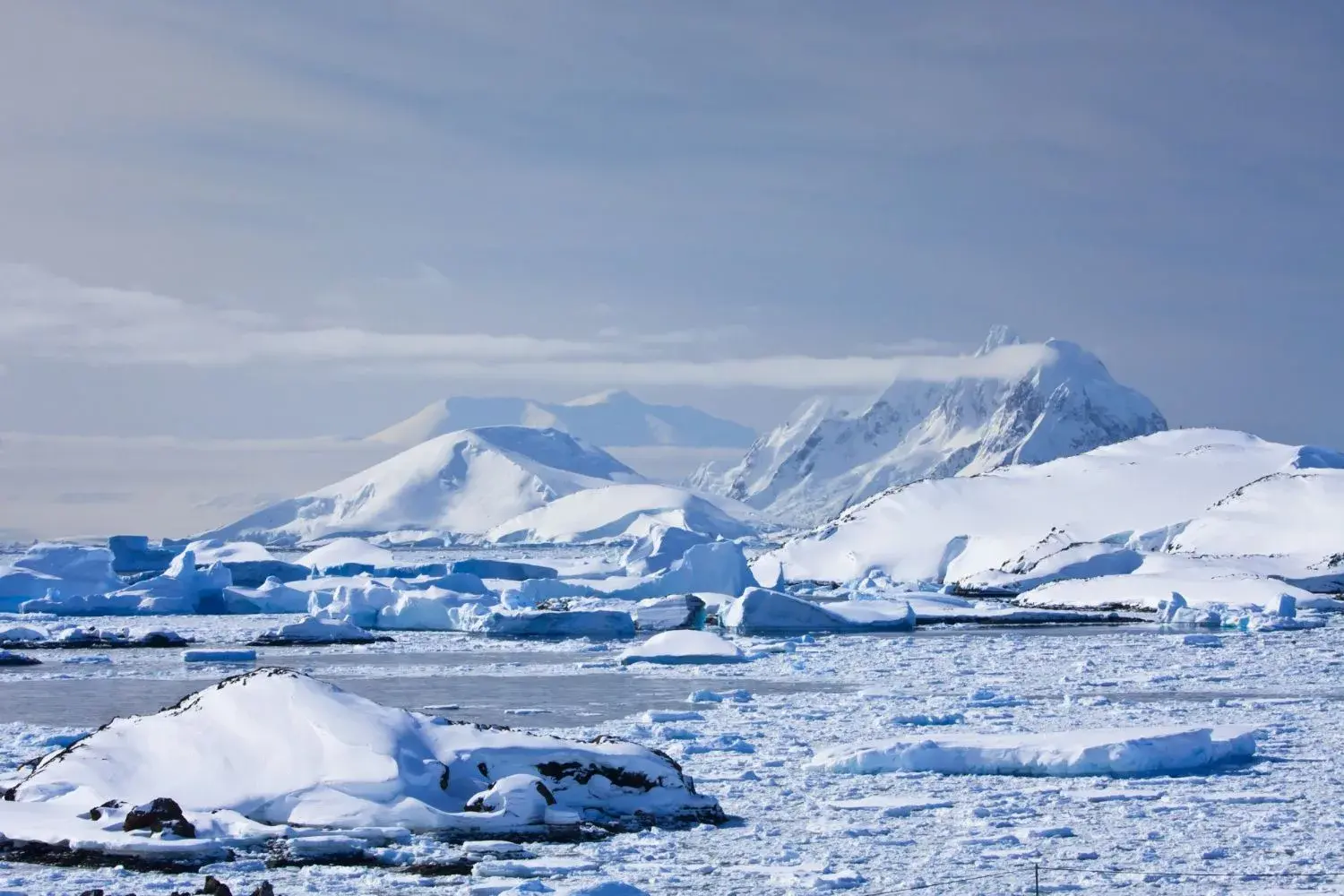
Antarctic bedrock is mostly hidden by the Antarctic Ice Sheet, which covers over 99% of the continent. Recent investigations into the sub-ice topography have captured, with much better detail, a series of low-elevation V-shaped basins that lie beneath a large area of the East Antarctic Ice Sheet.
Deep under the East Antarctic Ice Sheet, scientists have mapped a landscape that has never been exposed to sunlight. Using high-resolution sub-ice topography and geophysical data, researchers have uncovered numerous V-shaped basins that radiate from a central point near the South Pole.
The team has named this newly identified region the East Antarctic Fan-Shaped Basin Province. This semi-continental physiographic unit may hold clues to how Antarctica itself was sculpted during the breakup of Gondwana.
The structure consists of huge basins hidden beneath more than three kilometers of ice.
Giant groundwater system discovered in sediments below Antarctic ice
The fan-like pattern is not random. Researchers propose it was carved by distributed intraplate rotational extension, a tectonic process in which the continental crust has spread out from a central point.
The East Antarctic Fan-shaped Basin Province may be one of the largest examples ever discovered of continental crust stretching and rotating before Gondwana split into today’s southern continents.
This ancient stretching had three continental-scale consequences: Westward compression lifted the Gamburtsev Mountains, a hidden range buried beneath ice; Eastward rotation twisted the northern Transantarctic Mountains by about 20°, forcing them over the hot lithosphere of the West Antarctic Rift System. This segmented the chain into three blocks, each rising at different rates due to thermal buoyancy; Northward weakness along the fan’s edge created a fault zone that helped drive the separation of Antarctica and Australia, shaping the semi-circular continental margins we see today.
These tectonic events didn’t just sculpt the bedrock; they continue to influence the modern ice sheet. The fan-shaped basins under East Antarctica have guided the formation of glacial troughs and outlet glaciers, determining how ice flows across the continent.
In other words, the breakup of Gondwana left fingerprints that still control Antarctica’s frozen rivers of ice.
To study the hidden structure, scientists combined ice‑penetrating maps with geological clues, gravity and magnetic surveys, seismic readings, and models of the crust and lithosphere.
They concluded that the basins were shaped by deep tectonic forces inside Antarctica’s bedrock.
Dr. Guy Paxman, from the Department of Geography, helped lead the work. He calculated how East Antarctica’s land surface would look if the ice were gone, showing it would rebound upward by as much as a kilometer.
This “rebounded topography” gave the team a sharper view of the orientation and height of the newly discovered basins.
The discovery underscores how much of Antarctica’s story remains locked beneath kilometers of ice. By combining sub-ice imaging with geophysical interpretation, scientists are piecing together a map of ancient landscapes that shaped not only Antarctica but the global tectonic puzzle.
Journal Reference:
- Armadillo, E., Rizzello, D., Balbi, P. et al. A fan-shaped subglacial basin province in East Antarctica formed by rotational extension. Nat. Geosci. (2026). DOI: 10.1038/s41561-026-01991-6