

Honey bees use a defined ‘dance floor’ inside the hive
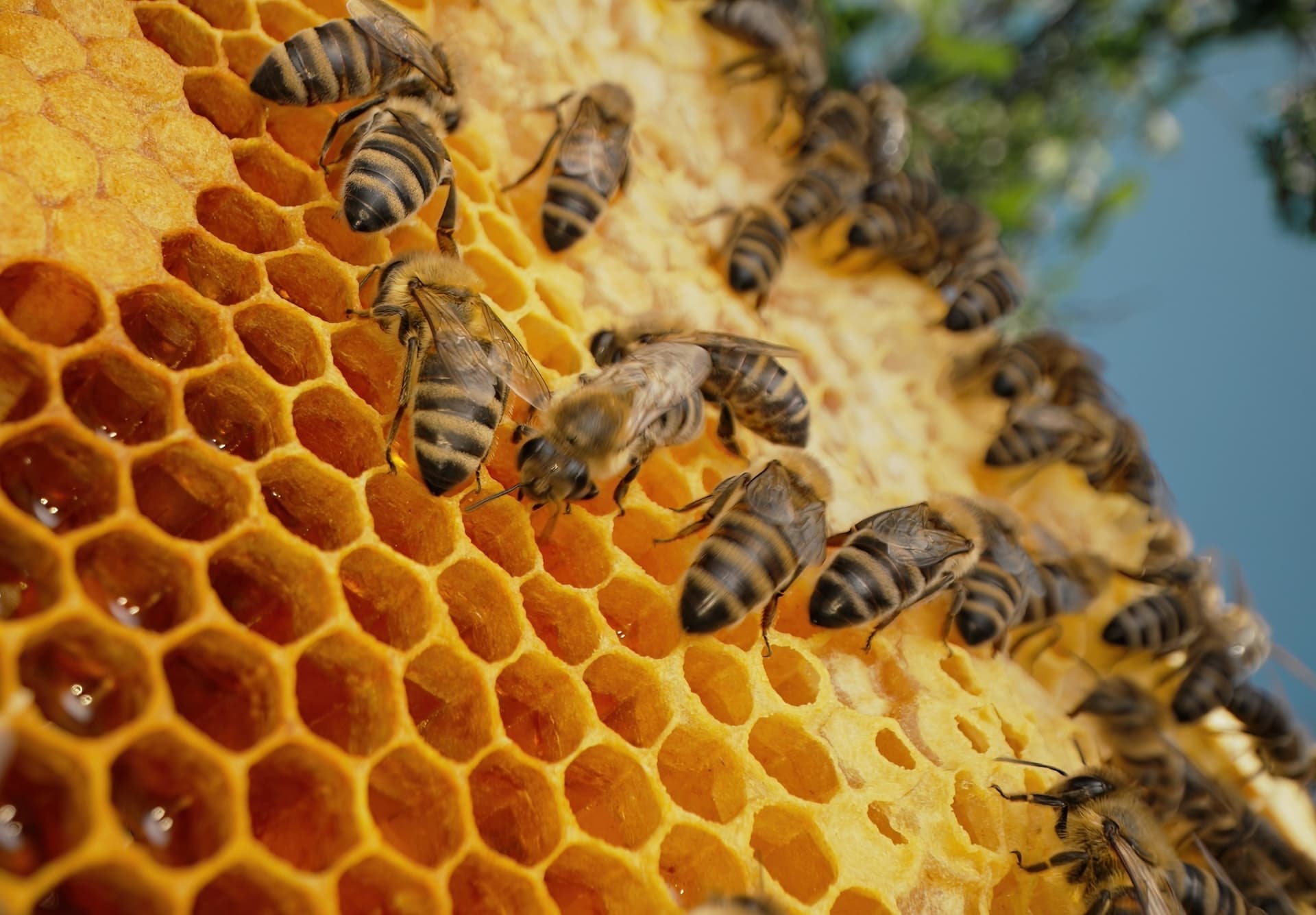
Honey bees concentrate their recruitment dances within a distinct, measurable area of comb inside the hive.
By drawing its precise outline, researchers can now track when and how colonies reorganize that shared communication space as conditions change.
Bees use one dance area

Inside glass-walled observation hives, thousands of recruitment dances, called waggle runs, clustered in a compact zone on the comb nearest the entrance.
Byron N. Van Nest at the University of Manitoba (UM) documented that those clusters form a consistent, bounded region that can be mapped and compared across colonies.
Across 155 half-hour observations, the same defined region captured nearly all dances in both four-frame and eight-frame hives, even as activity rose and fell.
That stability establishes the dance floor as a real, quantifiable feature of hive organization, setting up a closer look at how its shape and position vary over time.
Mapping the dance floor
Occasional dances happened far from the main cluster, so a single stray point could stretch any simple boundary.
First, the team built a convex hull, an outer polygon that encloses all points, for each short recording.
Outliers still inflated that outline, so the next step focused on the tight core where most dances landed.
To focus on the core, the team used a confidence ellipse, an oval that summarizes where most points fall, and kept the overlap.
Testing across many hives
To check that the boundary was not wishful thinking, the UM researchers applied it across two hive sizes and many days.
During 155 half-hour sessions, they logged 7,444 dances from eight colonies, then drew a new region each time.
On average, the method captured 90.8% of dances, and the capture rate did not differ between four-frame and eight-frame hives.
That reliability meant later comparisons could focus on real changes in the dance floor rather than measurement noise.
Dance area changes shape
Alongside position, each outline produced size numbers, including length and width, that described how bees used space.
In smaller four-frame hives, the dance region tended to stretch longer than it did in larger eight-frame hives.
Seasonal patterns also differed: width rose late in the year in small hives, but it fell in larger ones.
The day-to-day area changed as well, yet the swings did not follow a steady march in one direction.
Dance area shifts over seasons
Tracking the centroid, a single center point of the outlined region, showed whether the dance floor relocated.
Later in the season, four-frame centers moved farther from the entrance, while eight-frame centers stayed close to their start.
In four-frame hives, where space is limited, the shift claimed a larger fraction of the available comb.
Such movement hints that colony layout and crowding can redirect dances over weeks, even when the message stays reliable.
Dance direction shifts daily
Beyond location, the boundary had a tilt that described how the dance area lined up on the comb.
Morning to afternoon, eight-frame outlines rotated noticeably, whereas four-frame outlines held nearly the same alignment all day.
Midday marked the turning point, with rotation rising before noon and falling later, unlike the sun’s steady motion.
Internal crowding and traffic may steer where dancers can face and move, especially when frame size limits free paths.
Why bees gather to learn
A Nobel Prize speech described how the waggle dance, a run that encodes direction and distance, guides recruits to nectar and pollen.
Back in the hive, successful workers of Apis mellifera repeat that run on comb, and nestmates follow it inside the dark hive.
Concentrating dances in one region helps recruits find signalers quickly, because a crowded comb gives few chances to search.
Earlier recruitment experiments showed that comb surface changed how many followers arrived, so location can affect outcomes.
Limitations of the study
Even a precise map cannot explain why bees choose a spot, and the experiment design left some open ends.
In this dataset, hive size lined up with different years and settings, so size alone cannot claim the credit.
Unmarked bees also meant the team could not tell whether one dancer returned again, which can blur patterns.
Careful follow-up work can hold conditions steady, then test what changes the dance floor when the only difference is biology.
New ways to track dances
Video recordings already let computers track individual dancers, and a clear boundary tells those systems where to look.
Linking this with the new outline could measure when dance space expands during heavy foraging, or compresses during crowding.
Standardized numbers also make it easier to compare hives in farms, labs, or wild nests without arguing over definitions.
That common yardstick can support future tests of scent cues, comb texture, and traffic patterns that guide where dancers land.
Defining the dance floor through data converts a familiar bee behavior into a measurable component of the hive’s internal design.
As researchers apply it across matched hives and environments, the map should reveal when communication falters and when it adapts.
The study is published in the journal PLOS ONE.
—–
Like what you read? Subscribe to our newsletter for engaging articles, exclusive content, and the latest updates.
Check us out on EarthSnap, a free app brought to you by Eric Ralls and Earth.com.
—–