26 Totally Bonkers Language Facts We Learned In 2025 That Feel Made Up

26 Totally Bonkers Language Facts We Learned In 2025 That Feel Made Up

The Merriam-Webster Dictionary social media accounts are some of the best on all of... social media. They're truly top tier, always teaching us *regular folk* fun facts about words and phrases.
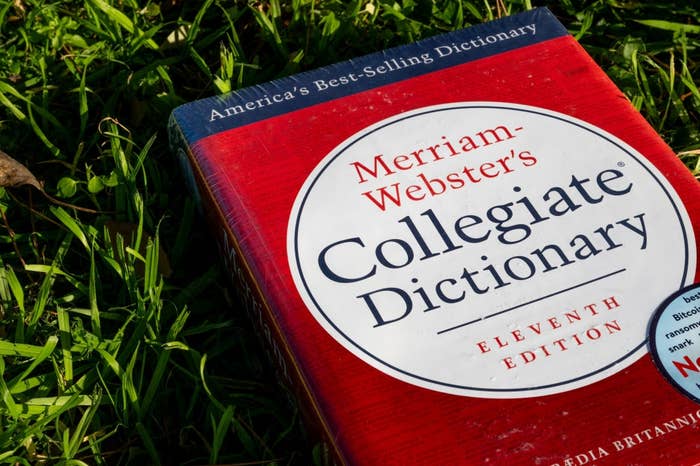
Merriam-Webster's Collegiate Dictionary, Eleventh Edition, lies on grass, displaying "America's Best-Selling Dictionary" on the cover

Brandon Bell / Getty Images

(This isn't an ad for the dictionary lol... it's just how I feel!)

That said, here's what they taught us in 2025:

1."'Goodbye’ is an alteration of 'God be with you.'"
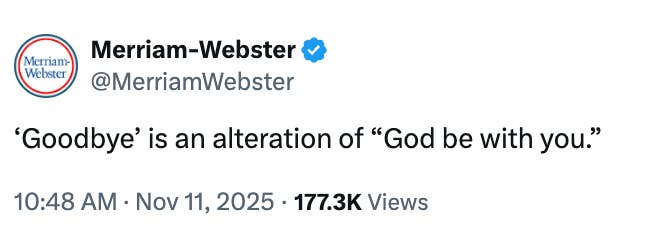
Tweet from Merriam-Webster: "'Goodbye' is an alteration of 'God be with you.'"

2.*Who* "Frank" is in the expression "Let's be Frank."
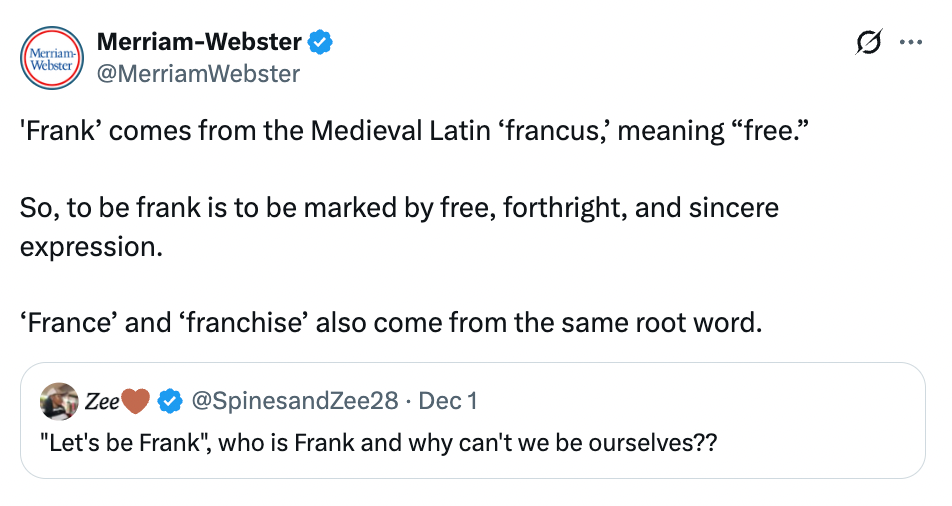
Merriam-Webster explains that 'Frank' is derived from Latin 'francus,' meaning 'free.' Related words include 'France' and 'franchise.'

3."Napkin" literally means "little tablecloth."
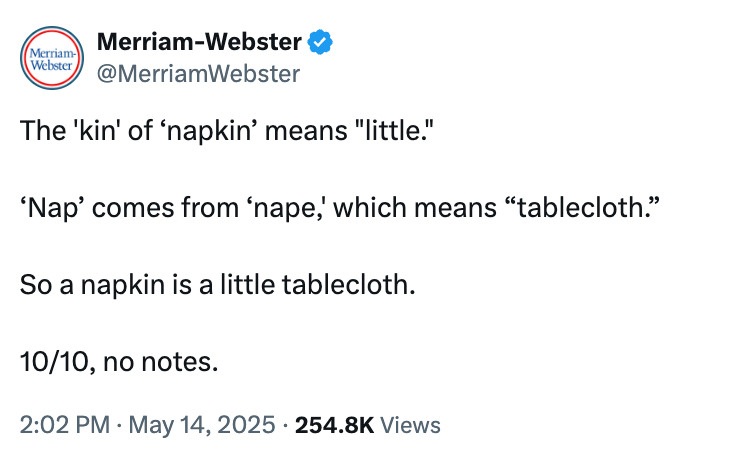
Tweet by Merriam-Webster explaining the etymology of "napkin" as "little tablecloth," noting "nap" from "nape," which means tablecloth

4.There's a word for a person who steals books:
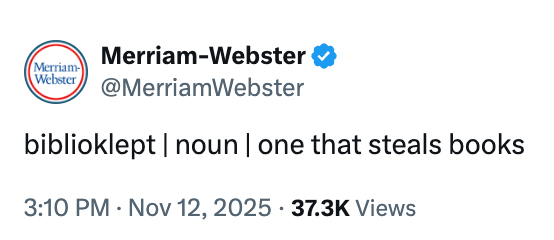
Tweet by Merriam-Webster defining "biblioklept": a noun meaning one who steals books

5.The phrase "souped up" originally referred to drugging horses to make them run faster.
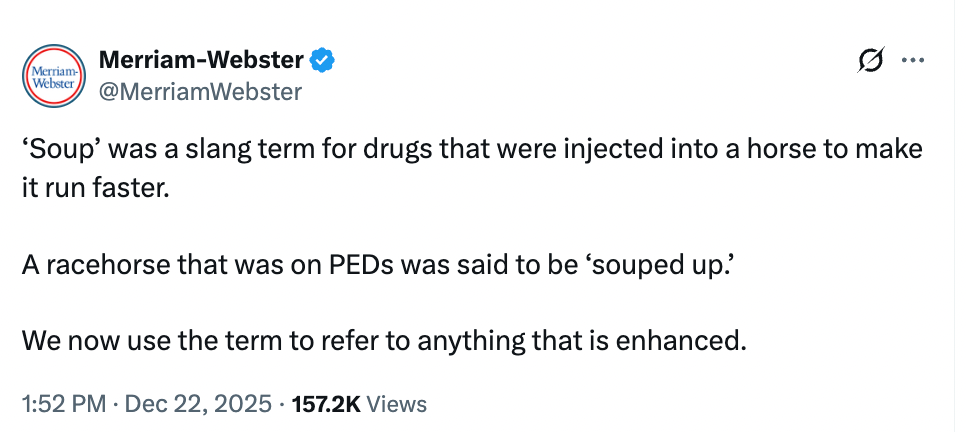
Merriam-Webster tweet explaining that "soup" was slang for drugs given to horses to enhance performance, now used to mean anything that is enhanced

6."Asterik" means "little star" in Greek.
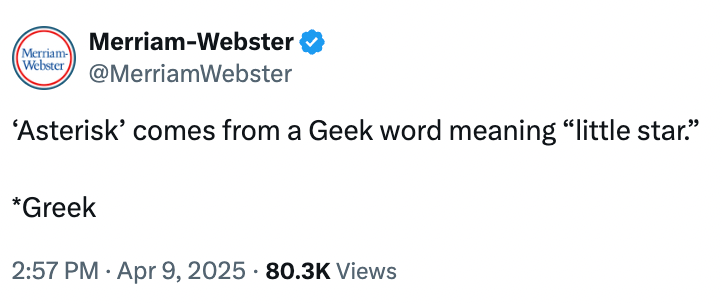
Tweet by Merriam-Webster: "'Asterisk' comes from a Greek word meaning 'little star.'" Followed by "*Greek."

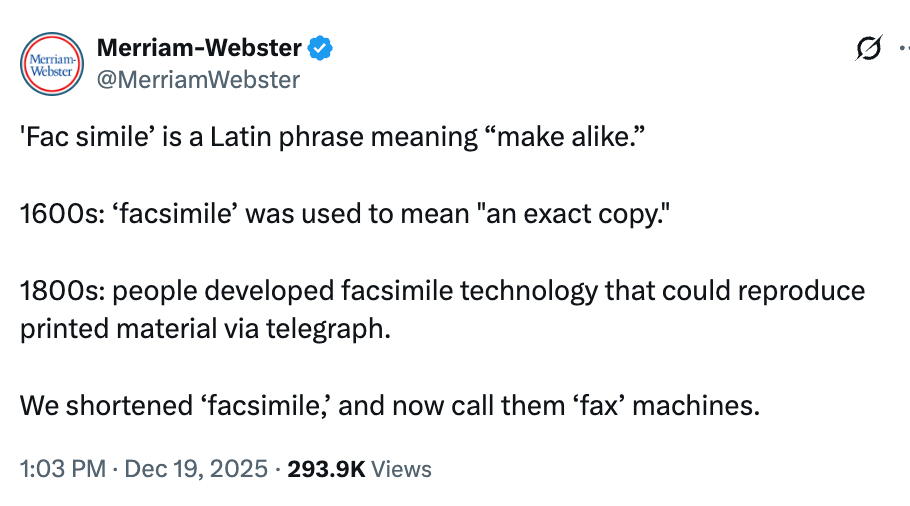
7.Why we call it a "fax" machine:

Merriam-Webster explains the evolution of "facsimile" from Latin meaning "make alike" to its use for copying technology, now called "fax" machines

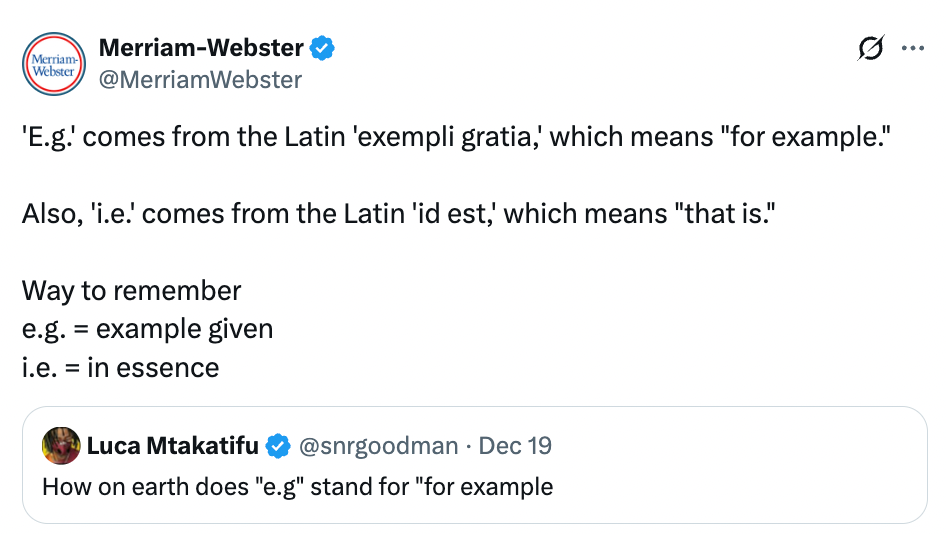
8.What the heck "E.g." means:

Merriam-Webster tweet explaining "e.g." and "i.e." origins and meanings, with a user's humorous reply questioning the abbreviation of "e.g."

9."The first known use of 'conspiracy theory' was in 1863."
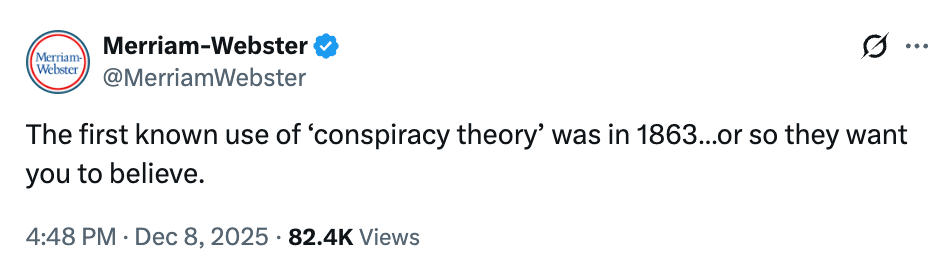
Tweet by Merriam-Webster humorously stating "conspiracy theory" was first used in 1863

10."'Howdy' is an alteration of 'how do ye.'"
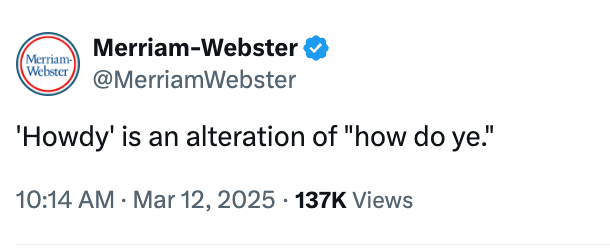
Tweet by Merriam-Webster: "'Howdy' is an alteration of 'how do ye.'"

11."'Robot' comes from the Czech word ‘robota’ which means 'forced labor.'"
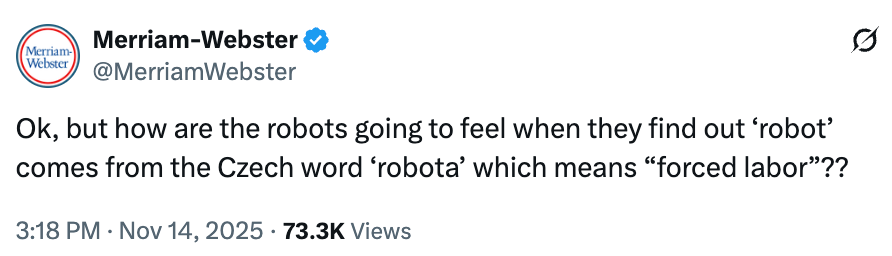
Merriam-Webster tweet questions how robots will feel knowing "robot" derives from Czech "robota," meaning "forced labor."

12.The "deck" in "Deck the Halls" comes from a Dutch word meaning "to cover."
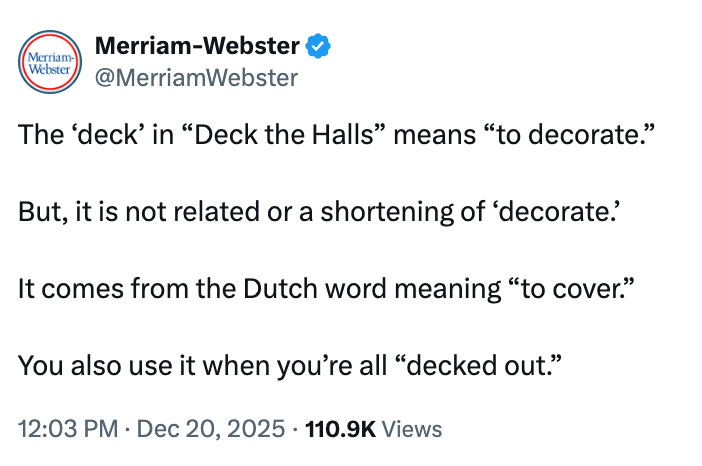
Merriam-Webster tweet explains "'deck' in 'Deck the Halls'" means "to decorate," originating from a Dutch word meaning "to cover."

13.The origins of "pro" vs. "con."
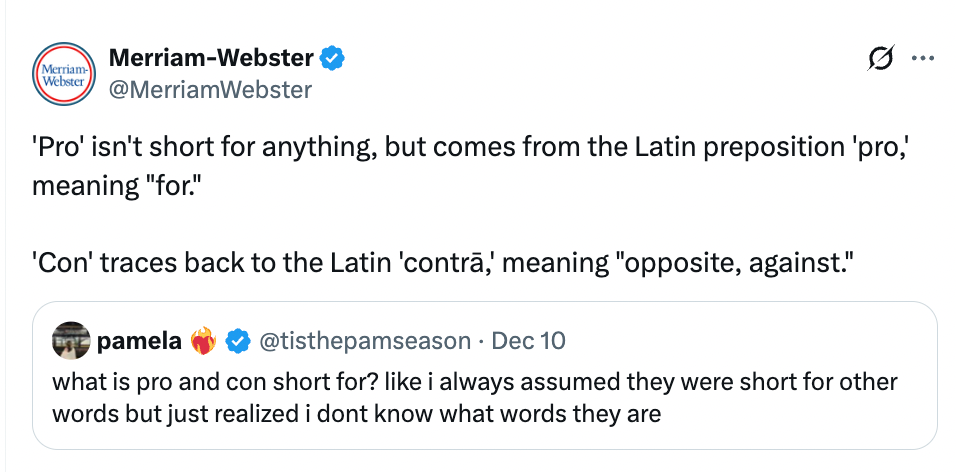
Merriam-Webster tweet explaining "pro" means "for" from Latin, and "con" means "opposite, against" from Latin "contra."

14.The definition of "enshittification."
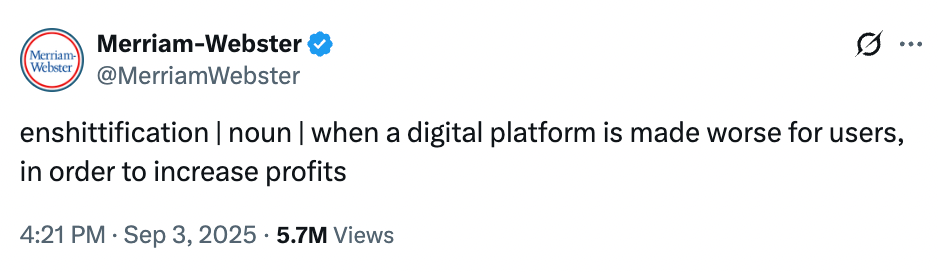
Merriam-Webster defines a new term: "enshittification," meaning when a digital platform worsens user experience to boost profits

15.There's a word that rhymes with "silver:"
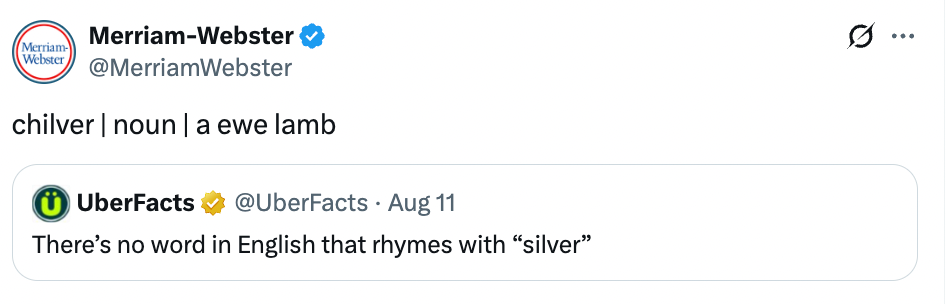
Tweet exchange: Merriam-Webster defines "chilver" as a ewe lamb, replying to UberFacts' note on English words that rhyme with "silver."

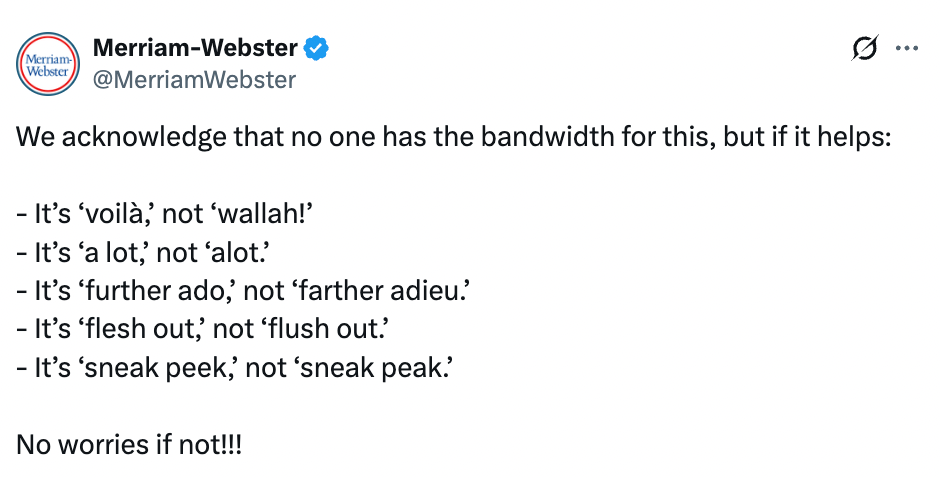
16.This:

Merriam-Webster tweet clarifying common phrase misspellings, such as "voilà," "a lot," "further ado," "flesh out," and "sneak peek."

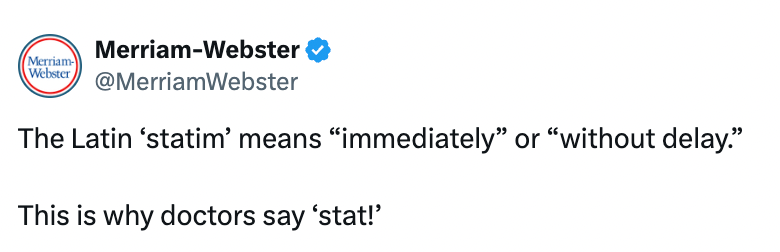
17.What "stat" comes from:

Merriam-Webster's tweet explains that "statim" in Latin means "immediately," which is why doctors use "stat" to indicate urgency

18.In the US we spell it "grAy" and everywhere else they spell it "grEy."
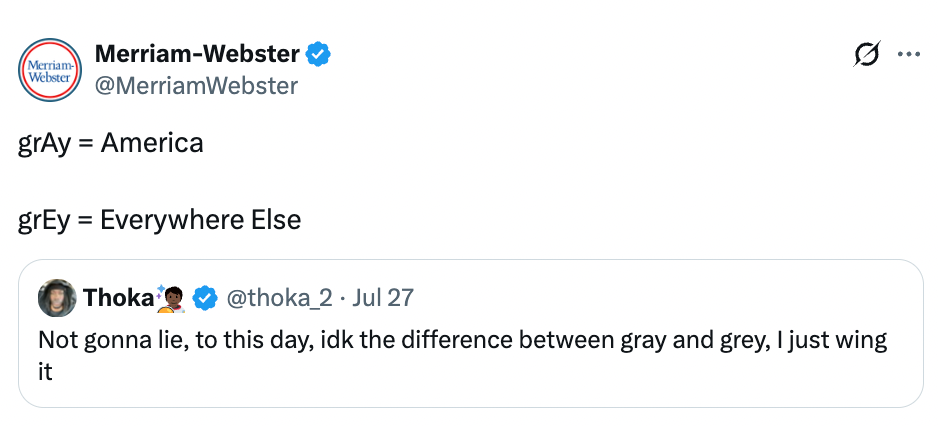
Merriam-Webster tweet explains: "grAy = America, grEy = Everywhere else." A user responds about confusion with gray vs. grey

19.The "B" in Oral B stands for "Brush."
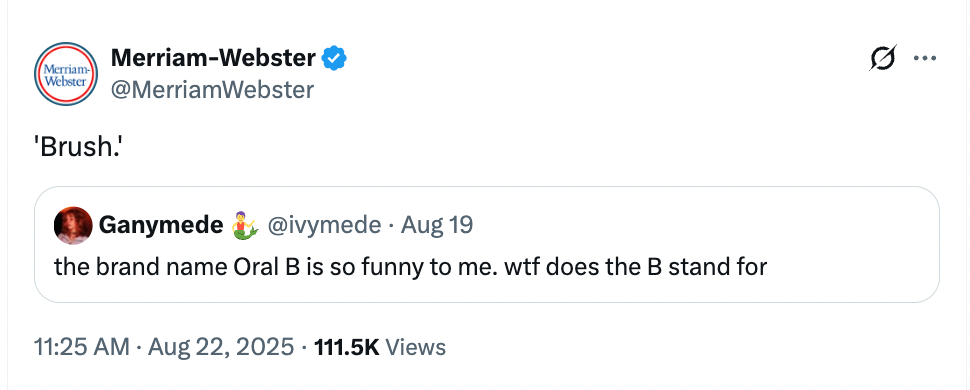
Merriam-Webster responds to a tweet asking what the "B" in "Oral B" stands for with "'Brush.'"

20."'Tulip' comes from the Turkish word ‘tülbent’ which means 'turban.'"
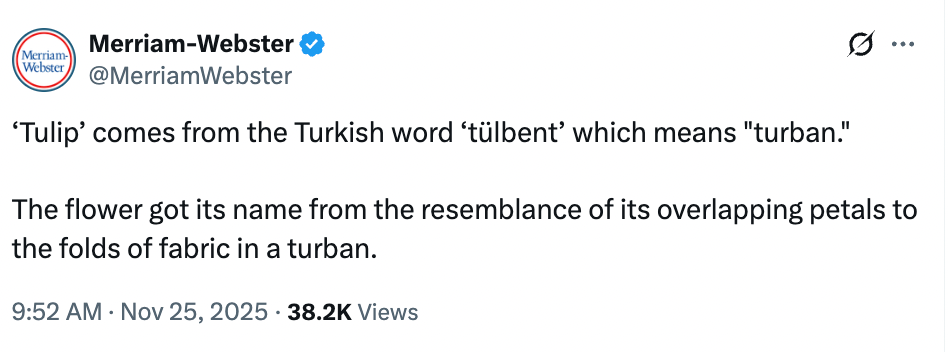
Tweet explaining the origin of the word "tulip," derived from Turkish "tülbent," meaning "turban," due to the flower's petal resemblance to a turban

21."'Astronomers' is an anagram for 'moon starers.'"
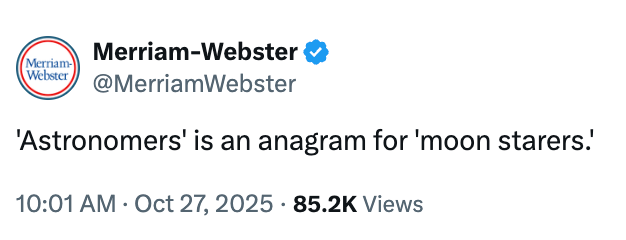
Tweet from Merriam-Webster: "'Astronomers' is an anagram for 'moon starers.'"

22.This:
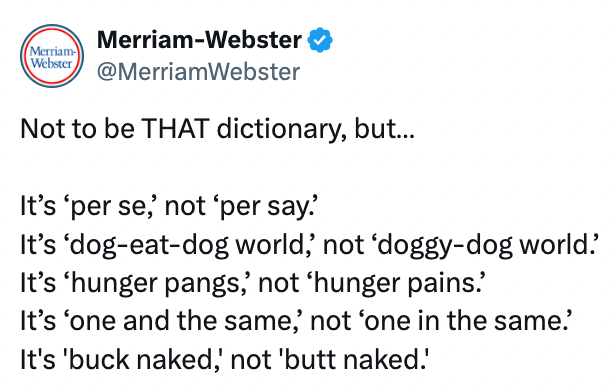
Merriam-Webster tweet correcting common language misconceptions like 'per se' instead of 'per say' and 'dog-eat-dog world' instead of 'doggy-dog world.'

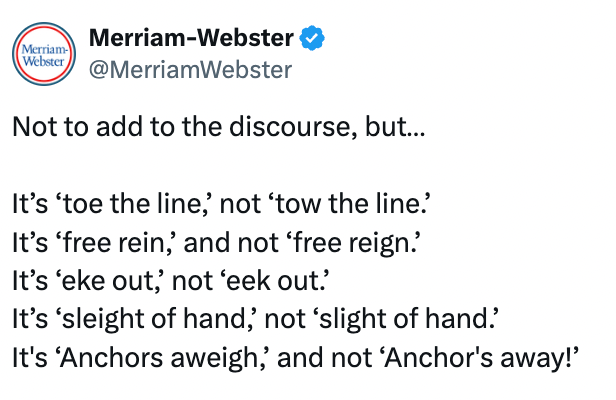
23.Also this:

Merriam-Webster tweet clarifies common phrase misconceptions: "toe the line," "free rein," "eke out," "sleight of hand," "anchors aweigh."

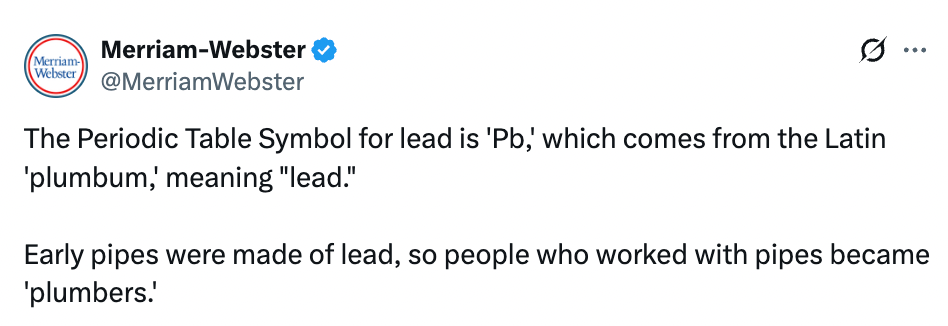
24.The origin of the word "plumber:"

Merriam-Webster tweet explains that "Pb" for lead in the periodic table comes from Latin "plumbum," related to early plumbers who worked with lead pipes

25."When in Rome" and "When life hands you lemons" are examples of 'anapodotons.'"
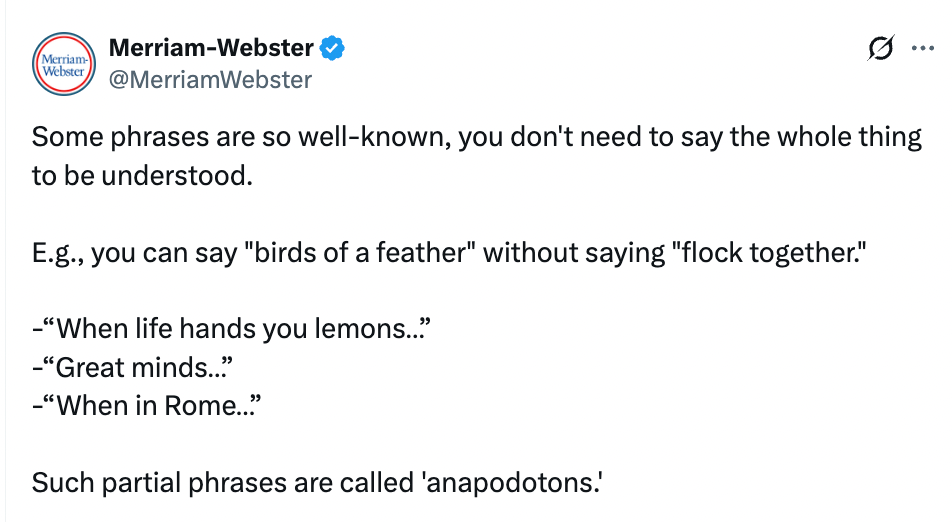
Definition of anapodotons: phrases using only part of a well-known saying (e.g., "birds of a feather")

26.And lastly, "snafu" means "Situation Normal, All Fucked Up."
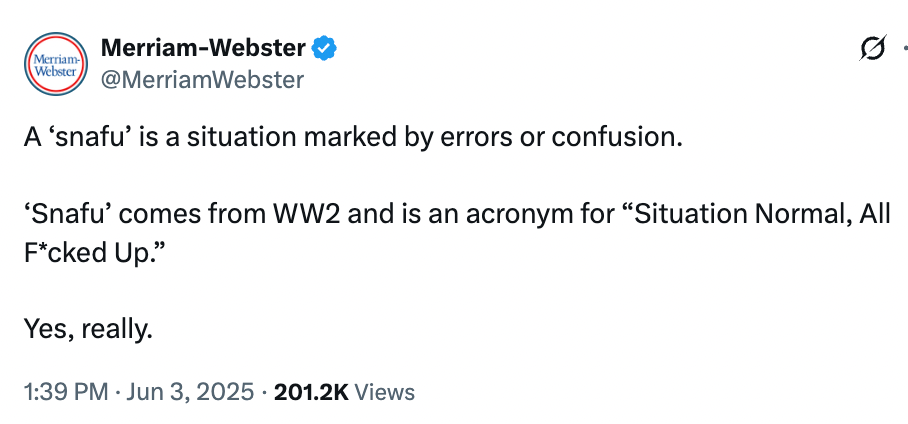
Tweet from Merriam-Webster explaining "snafu" as an acronym from WWII meaning "Situation Normal, All F*cked Up."