


Immortal sea cucumber? A fascinating discovery from the ocean floor
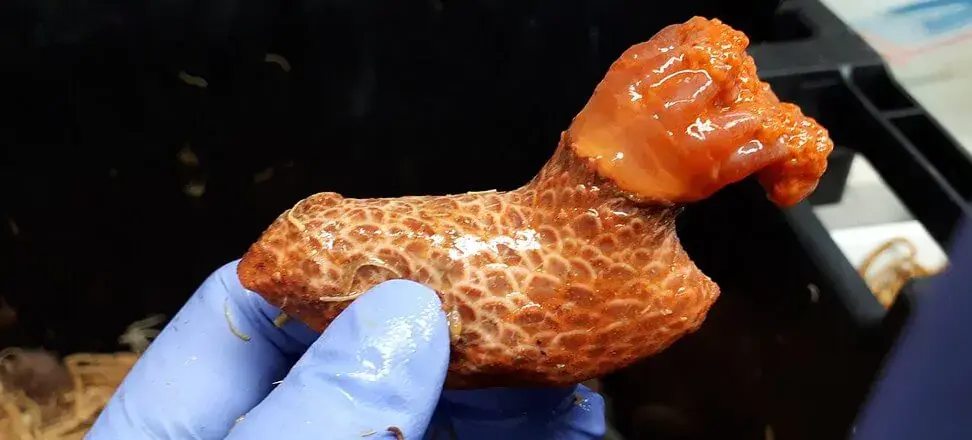
The sea cucumber, known in the scientific world as a Holothurian, is more often associated with a vegetable than with an animal. In reality, this passive creature may hold the secret to immortality. Scientists have proven that its tissues continue to grow even after amputation!
Like a lizard’s tail – the extraordinary abilities of the sea cucumber
More than 1,200 species of sea cucumbers have already been identified worldwide. These fascinating aquatic organisms, belonging to the phylum of echinoderms, are found in all oceans and inhabit a wide range of environments, from shallow coastal waters to depths of up to 5 km. They are most commonly found on coral reefs, sandy seabeds, and underwater meadows, where they act as ecosystem cleaners by consuming dead organic matter.
Among the most fascinating features of sea cucumbers is their ability to regenerate, which is part of a complex self-defense mechanism. When threatened, sea cucumbers can expel their intestines or part of their respiratory system in order to scare off a predator. Interestingly, the missing organs fully regrow within a few weeks.
Tissue that does not die
The fact that sea cucumbers are capable of remarkable regeneration is not surprising today. However, Canadian scientists decided to investigate how their cells behave outside the organism. For this purpose, they collected samples of epidermal, connective, nerve, and muscle tissue from individuals of the species Psolus fabricii, found in the northern Atlantic Ocean.
The observation of the collected samples left the researchers stunned. Placed in seawater without any nutritional supplementation, they healed and continued to grow for more than three years. The most significant regenerative changes occurred during the first week and were characterized by extremely rapid transformation.
This is the first case of tissue immortality under natural conditions, said Sara Jobson, the lead author of the study published in the journal Science Advances.
Does the sea cucumber hold the key to immortality?
In-depth analyses of the collected samples showed that amputated sea cucumber tissues exhibited immune activity, cell cycle progression, reorganization, and absorption of dissolved amino acids. Interestingly, compared with previous studies on other species, Psolus fabricii appears to be a global exception in this respect.
Why is this so important? Human cell cloning under laboratory conditions raises significant ethical controversy. Meanwhile, the extraordinary abilities of the sea cucumber demonstrate that the process of immortality is rooted in natural mechanisms. The authors of the study emphasize that, compared with other cells cultured in laboratory conditions requiring strict parameters, P. fabricii tissues required nothing beyond natural seawater.
This fascinating discovery revolutionizes current knowledge about tissue resilience and degradation, opening the door to research on wound healing and longevity. At the same time, as Sara Jobson points out, sea cucumber tissue explants seem to balance on the edge between life and death like zombies. This raises a more philosophical question: what does it actually mean to be alive?
main photo: Rebecca Evans/Wikimedia
Source:
Sara Jobson et al., Natural tissue immortality: Indefinite survival of sea cucumber explants. Sci. Adv. 12, eaeb1394 (2026). DOI: 10.1126/sciadv.aeb1394