

Grief has a way of becoming a search term on the internet. The next day, it’s a story that’s splashed across Facebook pages and entertainment websites, wrapped in the kind of certainty that tragedy rarely offers. One day, it’s a name you’ve never heard, typed into a phone while in a checkout line. One such question is “oaklynn domer cause of death.” It’s urgent, awkwardly worded, and reveals more about the public’s desire for neat explanations than it does about the realities of what a family is going through.
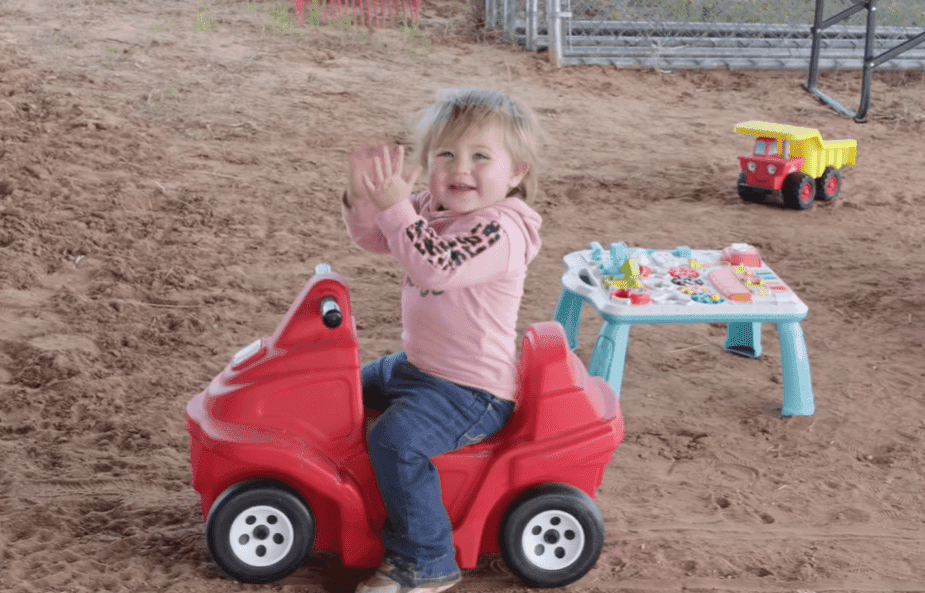
The facts are painfully straightforward: on February 19, 2026, Oaklynn Rae Domer passed away. She was a child who moved with her parents through the rodeo world, “traveling the rodeo circuit,” loving animals, and seemingly charming almost everyone she met, according to her obituary, which was published through a funeral home in Cherokee, Oklahoma, and mirrored on Legacy. Notably, it doesn’t provide a clinical explanation for the cause of death. A vacuum has been left by that omission, and vacuums on the internet don’t remain empty for very long.
| Category | Details |
|---|---|
| Name | Oaklynn Rae Domer |
| Age | 3 |
| Parents | Ryan Domer and Kelsie Chace Domer |
| Born | August 11, 2022 (Granbury, Texas) |
| Died | February 19, 2026 |
| Community Context | Rodeo circuit / WPRA family community |
| Services Mentioned Publicly | Feb. 26, 2026 (Dublin, TX) and Feb. 27, 2026 (Cherokee, OK) |
| Authentic reference link | https://www.lanmanfuneralhome.com/obituaries/oaklynn-domer |
A flood of posts has flooded that area, alleging a bizarre horse accident that resulted in fatal injuries. The accident has been described as either a sudden collapse or a medical episode. The first warning sign is that the language varies depending on who is posting; if details keep changing, you’re probably looking at secondhand accounts rather than confirmed reporting. The general idea may be correct. It’s also possible that the story is being honed for clicks because tragedy, particularly when it involves a child, spreads more quickly when presented as a warning.
However, unlike comment sections, the rodeo community’s response feels authentic. At events, people wore pink. In a circuit built on long drives, shared trailers, and the quiet intimacy of people who see each other once a week in dusty back corridors, tributes characterized Oaklynn as a familiar presence around arenas—one of those kids who becomes “everybody’s kid”. You can visualize the scene even from a distance: a concession stand that still smells slightly of fryer oil, metal bleachers cooling after sunset, and someone tying a ribbon onto a gate because it’s the only gesture that makes sense when words can’t express what they’re feeling.
It’s difficult to ignore how swiftly the public discourse shifts from lamentation to inquiry. What was said by whom? Was it verified? Why haven’t the parents shared information online? As though silence is suspicious, that final question keeps coming up. However, a family may use silence as a boundary to prevent strangers from picking on a personal injury. The confident tone of some posts feels a little off because, as several reports have pointed out, the family had not made any public details about the incident at the time the story went viral.
In contrast, the obituary seems to be a tiny act of defiance against the internet’s insatiable desire for narrative coherence. Frogs, horses, “yodeos,” puppies, friends, and the way a room changed when she entered are just a few examples of how it permeates life. These particulars provide an answer to a more important question—who she was, on the scale that mattered to those who knew her—than the one that people keep typing.
The fact that “cause of death” can have multiple meanings in popular memory is another unsettling fact. It is a medical statement for a hospital form. In a community, it’s the narrative that is recited in kitchens and arenas, the one that attempts to make chance seem avoidable. The widely shared horse-accident story serves as a means of giving chaos a name that prevents it from seeming like random events. However, it’s still unclear which aspects are based on assumptions and which are confirmed.
Without going beyond the record, it can be stated that on February 19, 2026, Oaklynn Rae Domer passed away, and her passing caused a public outpouring of grief both within and outside of rodeo circles. In contrast to the online whirlpool, the funeral home notice offers service details and a framework for how people can honor the family—practical details that feel grounded. This foundation is important because there are negative aspects of the contemporary grief economy, such as phony posts, questionable “news” websites, and the constant possibility that someone else will use a family’s tragedy as their content strategy.
The official published obituary does not specify a cause of death, and widely circulated accounts describe a tragic accident involving a horse. However, the specific circumstances should be handled carefully unless confirmed by official statements or reliable reporting. This is the most responsible response to the question of “Oaklynn Domer’s cause of death.” Confidence is frequently the first casualty in stories like this, followed closely by privacy.
Perhaps that is the last detail worth paying attention to. A child of three passed away. An absence is causing a family to rearrange their lives. Because they are at a loss for what to do, communities are dressing in pink. Though life, particularly the part that breaks people, rarely fits into one neat line, the internet will continue to demand explanations in a single sentence.