


Glaucoma: The Silent Thief of Sight - Peace Arch News
Sponsored Content
Published 6:00 pm Sunday, April 12, 2026
White Rock Optometry shares risks and how to protect your vision with diagnostic screening and early detection
Vision is arguably our most precious sense, allowing us to navigate, connect and appreciate the world around us. Yet, many people remain unaware of the serious threat to their sight that glaucoma, often called the ‘silent thief of sight,’ poses.
Understanding this eye disease, and prioritizing regular screenings, is critical to safeguarding your vision for years to come, notes White Rock Optometry’s Dr. Sally Donaldson.
Glaucoma can cause irreversible vision loss, and has no early symptoms or visible warning signs, unless diagnosed through complete eye exams.
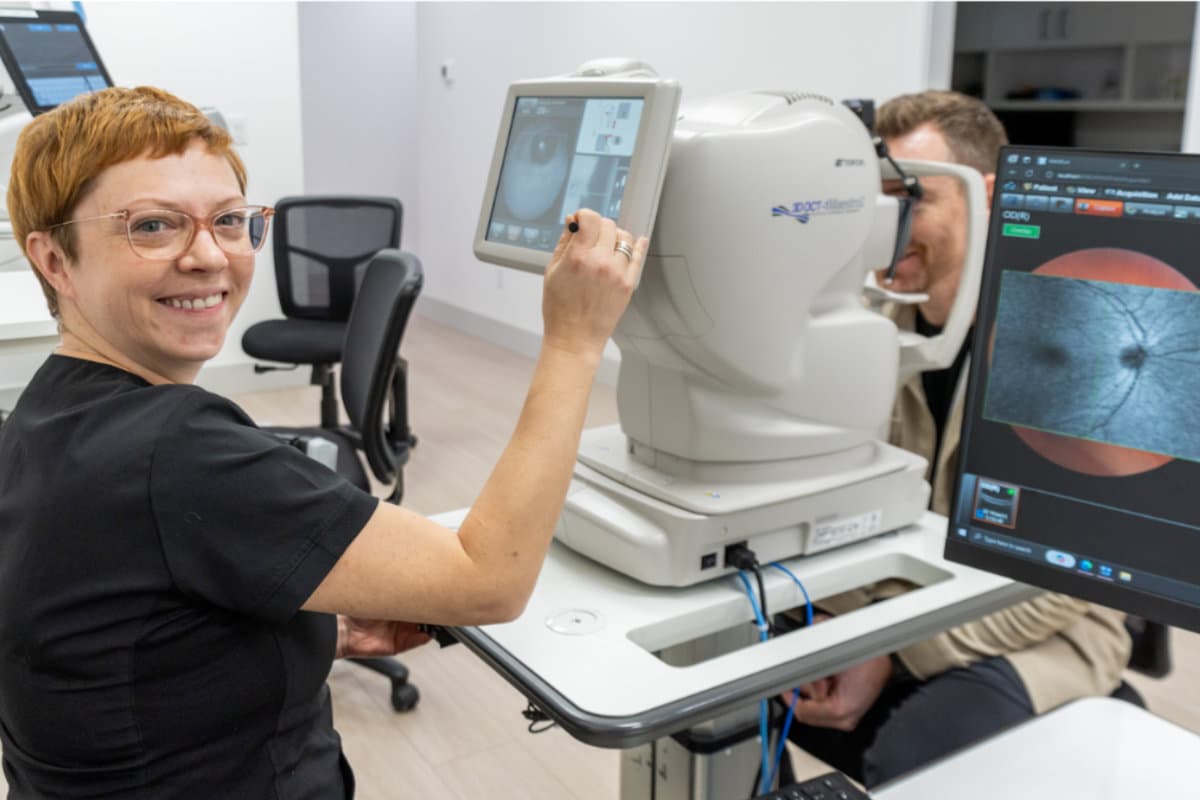
These eye exams include eye pressure measurements, retinal imaging and visual field testing. This makes it essential to be proactive when it comes to your eye health by scheduling regular and comprehensive eye exams.

Individuals experiencing Glaucoma (Left) can permanently lose part or all of their vision. Photo courtesy White Rock Optometry.
Age and family history are both significant risk factors for developing glaucoma. “By the age of 70, an estimated 11 per cent of Canadians have glaucoma,” Dr. Donaldson says. “Glaucoma is difficult to detect because patients display no symptoms or changes to their vision. That’s why setting baselines and keeping up-to-date with regular eye check-ups is the most critical step you can take.”
During glaucoma testing, your doctor of optometry will assess three critical factors to confirm glaucoma risk or diagnosis by assessing: intraocular eye pressure, peripheral vision, and the health of the optic nerve.

A healthy Optic Nerve (Left) compared to an Optic Nerve experiencing Glaucoma (Right). Photo courtesy White Rock Optometry
Advanced diagnostic tools, such as optical coherence tomography (OCT) make early detection possible.
“With the power of this medical imaging, and the ability to catch glaucoma early, treatment can be very effective in managing the condition and preserving sight longterm.”
In addition, age-related risk factors such as the anatomy of the eye, previous injury to the eye, steroid use, and medical conditions such as Diabetes, Sleep Apnea and Migraine, play an important role in determining who is at risk for developing glaucoma.
“A seemingly minor trauma, such as being hit in the eye with a snowball when you were younger, can lead to severe glaucoma later in life. ” Dr. Donaldson explains.
For anyone concerned about their eye health or simply due for a check-up, now is the time to prioritize that appointment. “Our sight is precious,” she says. “We urge everyone, especially those over 50, to know the risks and seek professional care.”
For more information, or to book an appointment, visit whiterockoptometry.com or call 604-536-4999.
READ MORE: Seeing dry eye clearly: How White Rock Optometry is treating the root cause
READ MORE: How to prevent and treat childhood myopia to safeguard eye health