


A Single Silver Coin Led to the Uncovering of One of the Most Well-Preserved Prehistoric Fortresses!
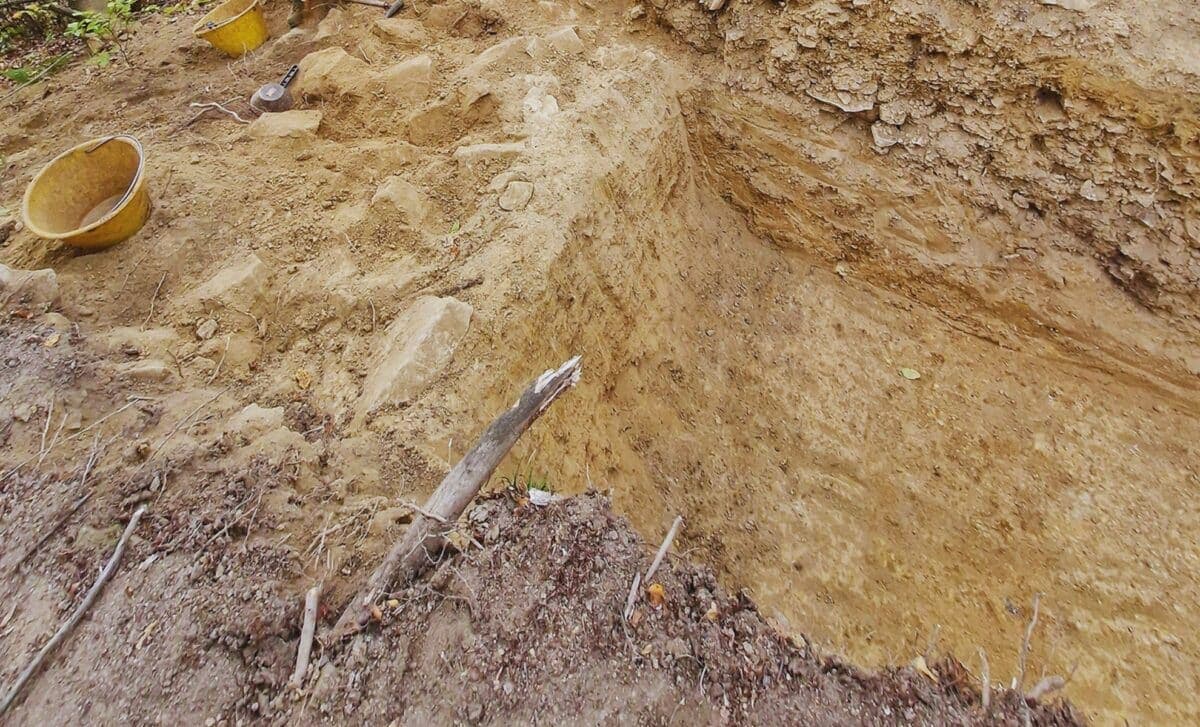
A handful of silver coins, illegally sold on the black market, has led to the discovery of a monumental ancient fortress hidden deep in the Papuk Mountains of eastern Croatia. While illicit excavation and trafficking are typically destructive, this accidental find has unearthed one of the best-preserved prehistoric settlements ever seen in the region.
It all began with reports of silver coins from the area being sold on the black market. These coins, dating back to the La Tène period of the late Iron Age, caught the attention of archaeologists, who soon realized that the looted treasure came from a long-forgotten site.
A Hidden Catalyst for Change
According to Hrvoje Potrebica, a professor of prehistoric archaeology at the University of Zagreb, the illegal sale of the silver coins was, ironically, what first alerted archaeologists to the existence of the Gradina site. These coins had been looted and sold on the black market, drawing the attention of researchers who would otherwise have overlooked the area.
However, the downside of this discovery is the loss of crucial context caused by the looting. Potrebica and his team found that the removal of the coins and other artifacts had stripped away important historical information about how the site was originally used and what it might have looked like in its prime.
Despite this setback, the situation isn’t entirely bleak. The silver lining is clear: the looted coins, while damaging, ultimately led archaeologists to uncover a rare and exceptional treasure.

Unearthing the Fortress: A Remarkable Preservation
Once excavation teams began digging at Gradina, they were stunned by what they found. Unlike many prehistoric fortresses in the region, which were constructed with perishable materials like earth and wood, the fortifications at Gradina were built with something entirely different. According to a statement published in the official website of the Virovitičko-podravska County.
“These are some of the most visible ramparts, very well-preserved, of a prehistoric settlement in this part of Croatia,” Potrebica noted. “Usually they were built of earth and wood, so they fell into disrepair, but here it is different.”

Evidence of a Highly Organized Prehistoric Society
The team uncovered a complex series of defensive walls made from dry-stone construction, some reaching a thickness of over 1.5 meters. These walls, in some sections, are as high as 8 meters, suggesting a level of sophistication and organization that’s rarely seen in prehistoric Europe. What’s even more remarkable is that the stone fortress structures remain clearly visible in the landscape, unlike most prehistoric settlements that relied on materials which have long since decayed.
“At this place, we did not expect anything like this,” Potrebica said, “and it increases our amazement. In my 25-year career, I have never seen anything like this. Today we hit the jackpot.”
The fortress is believed to have covered an area of roughly four hectares, no small feat for the time. The sophistication of the fortifications suggests that the people who built them were part of a highly organized society. The presence of ceramic fragments found nearby further supports this, indicating that this site was likely a long-term settlement as well.