

Join the Search for Unidentified Anomalous Phenomena Within the Galileo Project!

Press enter or click to view image in full size
Exciting news: the Galileo Project is seeking help from volunteers in labeling objects in the sky!
The Galileo Project’s goal is to conduct a systematic scientific search for evidence regarding extraterrestrial technological artifacts. Our research team aims to bring the search for extraterrestrial technological signatures of extraterrestrial technological civilizations from accidental or anecdotal observations to the mainstream of transparent, validated and systematic scientific research. The Galileo Project is complementary to traditional SETI, in that it searches for physical objects near Earth that are associated with extraterrestrial technological equipment, and not for electromagnetic signals from distant stars.
Press enter or click to view image in full size
Press enter or click to view image in full size
Press enter or click to view image in full size
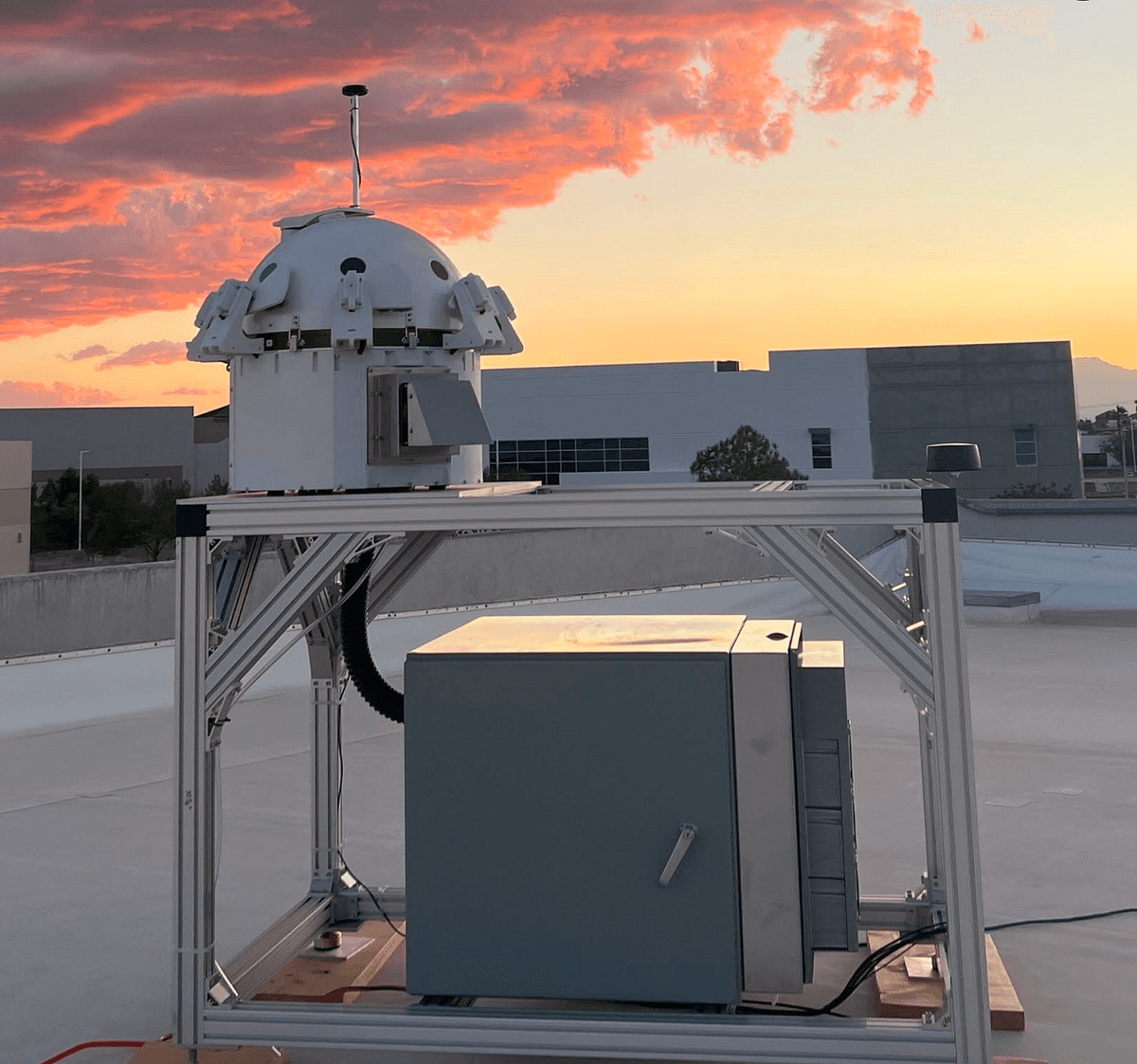
The Galileo Project, headquartered at Harvard University under my leadership, operates three new observatories: one in Massachusetts, another in Pennsylvania and the latest and most advanced — in Nevada. In contrast to common astronomical observatories which seek distant sources, the architecture of the Galileo observatories was designed to focus on objects within the Earth’s atmosphere. Our instruments continuously observe the entire sky at each location in the infrared, optical, radio and audio bands. The data stream is being analyzed by artificial intelligence (AI) models in search for anomalous outliers among millions of documented objects every year.
We search for Unidentified Anomalous Phenomena (UAP) with flight characteristics that deviate from human-made or natural objects. Our goal is to figure out the nature of UAP through detailed observations. Our observatories aim to infer distances of objects through the method of triangulation, by observing them from different directions with multiple units separated by about 10 kilometers from each other.
Press enter or click to view image in full size
The classification of sources in the sky into familiar human-made objects — like airplanes, drones, helicopters, balloons or satellites, and familiar natural objects — like birds or clouds, is challenging because each of these objects appears differently depending on the time of the day, the background sky patterns, and its orientation relative to the Sun or the Moon.
In the process of training our AI models, we are seeking help from volunteers who are interested in labeling objects from our latest images. For that purpose, the Galileo research team established a new website which displays images and asks interested volunteers to classify objects in the sky into known categories.
If you are interested in helping out the Galileo Project in its exciting mission, please click on the link here.
Press enter or click to view image in full size
While our technology provides the framework, the success of the Galileo Project’s mission ultimately depends on human insight. This is where you come in.
Our engineering and data teams are currently focused on infrastructure and model development, meaning that many of the images in our database have never been viewed by a human eye. This is your opportunity to see our data first-hand. By participating, you are directly engaging in the search for UAP. Indeed, there is a real possibility that you might spot something significant that has gone unnoticed.
To ensure our machine learning models can accurately detect, track, and characterize UAP, they require a robust dataset of manually labeled images. We currently lack the internal capacity to label this volume of data alone. We are asking the community to assist us with this essential task to improve the accuracy and reliability of our detection systems.
Last week, former President Obama and current President Trump discussed UAP. Obama said about aliens: “They’re real but I haven’t seen them,” President Trump responded that Obama gave “classified information, he is not supposed to be doing that.” Shortly afterwards, President Trump released the statement: “Based on the tremendous interest shown, I will be directing the Secretary of War and other relevant departments and agencies to begin the process of identifying and releasing government files related to alien and extraterrestrial life, unidentified aerial phenomena (UAP), unidentified flying objects (UFOs), and any and all other information connected to these highly complex but extremely interesting and important matters. GOD BLESS AMERICA!”
Of course, we can all wait for the Pentagon or relevant departments in the intelligence agencies to release information about UAP, but while waiting — we can also search the sky for rare and exotic objects. We do not need to rely on the government for data on objects manufactured by non-human intelligence. We can simply look up.
It took the research team of the Galileo Project nearly 5 years to construct three Galileo observatories. Now that these observatories deliver fresh data, we need your help in sorting out objects in our images.
All of us can search for “alien and extraterrestrial life, unidentified aerial phenomena (UAP), unidentified flying objects (UFOs), and any and all other information connected to these highly complex but extremely interesting and important matters.”
Press enter or click to view image in full size
***
At 11 AM Eastern Time on Thursday, February 26, 2026 - which happens to be my birthday, I will be delivering an overview of the Galileo Project in a colloquium, streamed online on YouTube at the following link:
The title and abstract of the talk are as follows (with more details available here):
Searching for Extraterrestrial Technological Artifacts Near Earth: Packages in Our Mailbox
Over the past decade, the first interstellar objects were discovered. They include several interstellar meteors including IM1 — detected on January 8, 2014, as well as the interstellar objects: 1I/`Oumuamua detected on October 19, 2017, 2I/Borisov detected on August 29, 2019 and 3I/ATLAS detected on July 1, 2025. Among these, the second and fourth appeared anomalous relative to known solar-system rocks whereas the third appeared to be a familiar comet. IM1 exhibited the highest material strength among all meteorites in the CNEOS catalog of NASA. In June 2023 we recovered 850 spherules from the Pacific Ocean site of IM1. A tenth of these submillimeter meteoritic spherules displayed a unique chemical composition, different from familiar solar system materials. 1I/`Oumuamua featured a flat shape and non-gravitational acceleration with no detectable cometary evaporation. 3I/ATLAS has chemical and geometric anomalies, including a trajectory aligned to within 5 degrees of the ecliptic plane. Currently, new Galileo Project Observatories are monitoring millions of objects near Earth in the infrared, optical, radio and audio and analyzing their nature with machine-learning software. Forthcoming data from the Rubin Observatory in Chile will offer additional clues on the nature of interstellar objects. Are products from extraterrestrial technological civilizations lurking among the natural interstellar rocks?
ABOUT THE AUTHOR
Press enter or click to view image in full size
Avi Loeb is the head of the Galileo Project, founding director of Harvard University’s — Black Hole Initiative, director of the Institute for Theory and Computation at the Harvard-Smithsonian Center for Astrophysics, and the former chair of the astronomy department at Harvard University (2011–2020). He is a former member of the President’s Council of Advisors on Science and Technology and a former chair of the Board on Physics and Astronomy of the National Academies. He is the bestselling author of “Extraterrestrial: The First Sign of Intelligent Life Beyond Earth” and a co-author of the textbook “Life in the Cosmos”, both published in 2021. The paperback edition of his new book, titled “Interstellar”, was published in August 2024.
Professional website:
https://lweb.cfa.harvard.edu/~loeb/
Social media:
https://avi-loeb.medium.com/
https://www.youtube.com/@ProfessorAviLoeb
https://open.spotify.com/show/1zhndXkvSY2b8FdjspFpCd
https://x.com/ProfAviLoeb