


Stanford Medicine releases study that says mRNA-based COVID vaccines can cause myocarditis
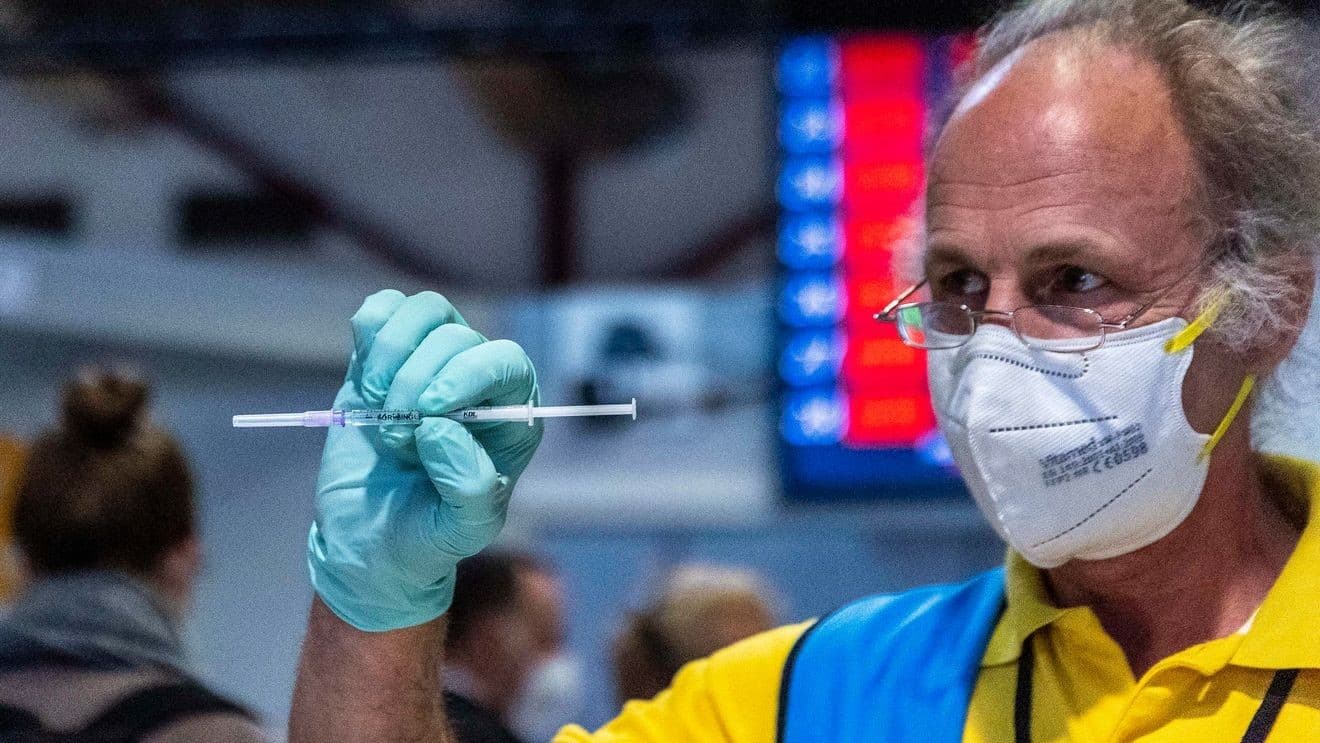

BERLIN, GERMANY - FEBRUARY 28: A medical worker holds a syringe with a shot of a vaccine against Covid-19 at the Tegel vaccination center on February 28, 2022 in Berlin, Germany. (Photo by Carsten Koall/Getty Images)
WASHINGTON (TNND) — A study from Stanford Medicine revealed that mRNA-based vaccines for COVID-19 can cause myocarditis in young men and adolescents.
Stanford Medicine revealed in an article published Dec. 11 that while mRNA vaccines for COVID-19 are “extremely safe,” there is a risk of myocarditis or heart inflammation.
“Vaccine-associated myocarditis occurs in about one in every 140,000 vaccinees after a first dose and rises to one in 32,000 after a second dose,” the Stanford Medicine article reads.
“For reasons that aren’t clear, incidence peaks among male vaccinees age 30 or below, at one in 16,750 vaccinees.”
Joseph Wu, MD, PhD, the director of the Stanford Cardiovascular Institute, said that in most cases, heart function is restored after the vaccine.
“It’s not a heart attack in the traditional sense,” he said.
“There’s no blockage of blood vessels as found in most common heart attacks.”
He said that when the symptoms are mild there hasn’t been structural damage to the heart, doctors observe the patients and monitor them for recovery.
He said that if the inflammation is severe, it could result in death, but that rarely happens.
“Medical scientists are quite aware that COVID itself can cause myocarditis,” Wu said. “To a lesser extent, so can the mRNA vaccines. The question is, why?”